Updated 2026. This post was written in 2022, when creating a stablecoin through a platform was new. The walkthrough below still describes how issuance works. What has changed is the scale of the collapse in cost, which I wrote about in $100m to $1, and the surface area, which now includes a full API for auth, balances, transfers, and webhooks across multiple chains.
Brale enables financial institutions to create stablecoins. The team at Brale has been developing the issuance platform with early client feedback from the start.
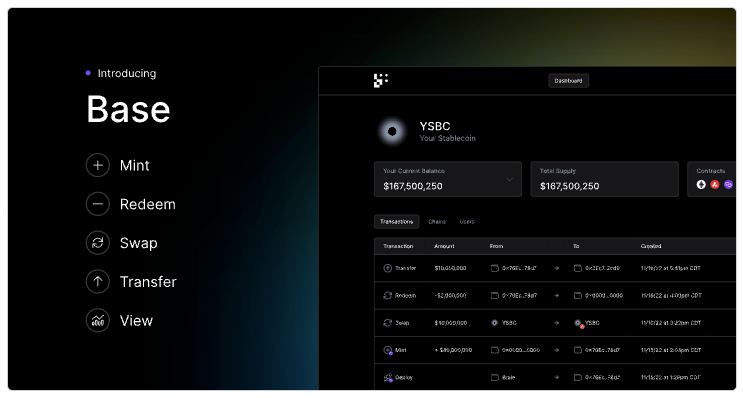
The platform makes the functions of minting, creating stablecoins, redeeming or removing them from circulation, swapping or changing chains or stablecoins, and viewing the asset on various chains as easy as logging in.
How to create a stablecoin
As a standalone function, each one of these across multiple blockchains can be difficult on its own. Creating stablecoins requires one to define the core primitives of the stablecoin. Brale deploys the audited contract on whatever chain you select once you determine the attributes of your stablecoin.
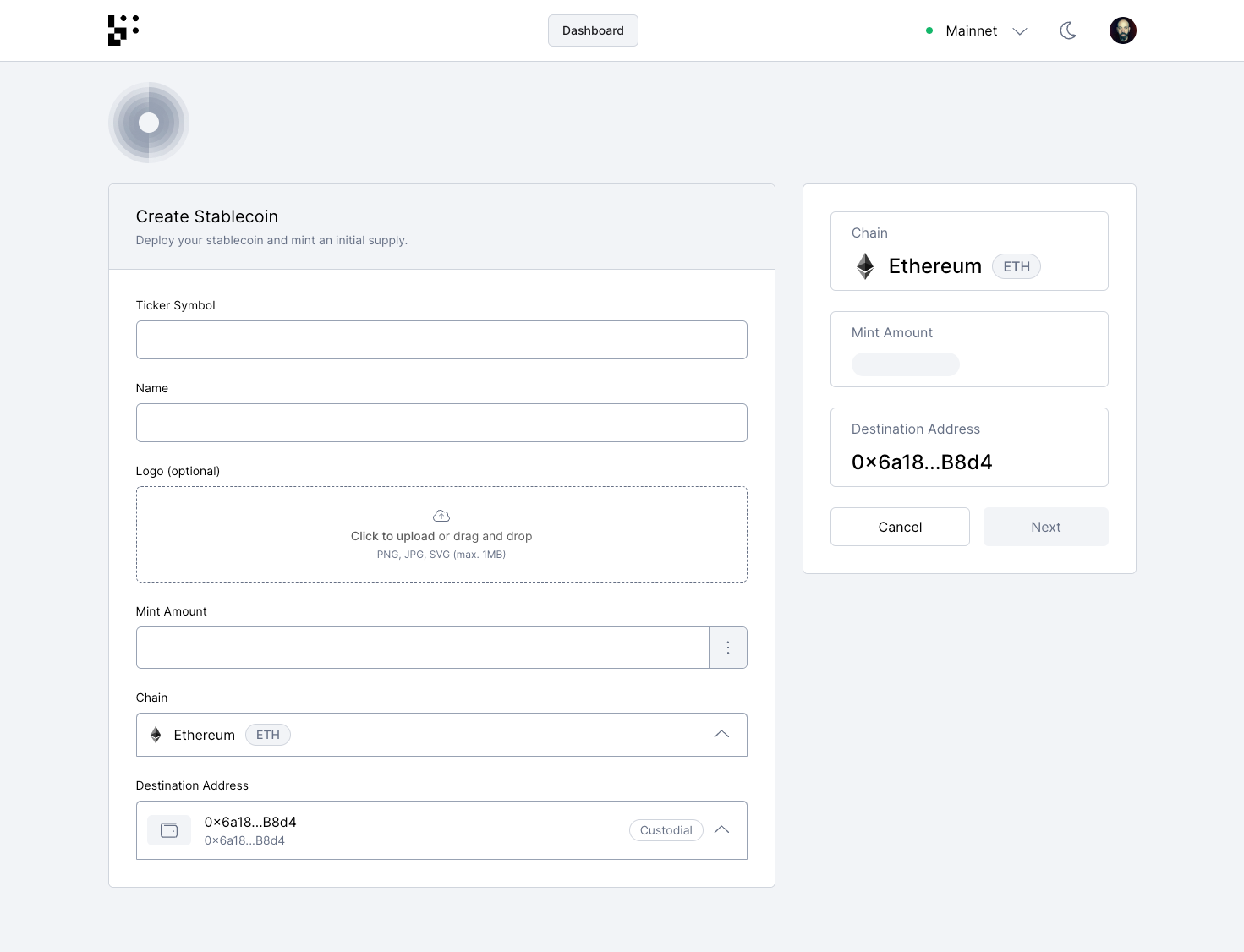
Aside from defining the primitives, you configure the treasury to back the stablecoin, which is done in the following step. Once deployed you can mint more, burn, swap the stablecoins between the deployed chains and transfer them to your ecosystem or wallets. The destination address can be your existing provider’s wallet infrastructure. You control the circulation based on what is reflected in your treasury.
Whenever a stablecoin is swapped between different blockchains, the amount in circulation is maintained. No bridging, just a nicely maintained natural supply.
The steps, in order:
- Define the attributes of your stablecoin, its core primitives.
- Configure the treasury that backs it.
- Deploy the audited contract on the chain you select.
- Mint, burn, swap between chains, and transfer to your ecosystem or wallets.
Why institutions?
One of the early observations at Brale is that most of the world’s capital is still off-chain, which means it can’t benefit from 24/7 productivity. DeFi could also use some of the stability of CeFi. They both have their advantages. It’s just hard to get going with all the new technologies.
Brale abstracts the complexity. Institutions using it to create stablecoins or deploy assets don’t need any engineering resources to get started. They don’t need to purchase cryptocurrency to pay gas fees or learn about Solidity. Brale has done all that.
Isn’t there a better time to launch a crypto product? Well, if it was a “crypto product,” probably. Now is the perfect time for regulated entities to use decentralized protocols more heavily because the technologies are ready for primetime.
The ecosystem can benefit from stability and participation from regulated entities. The future is a combination of things that appear to be different.
Testnet first. Mainnet when you’re ready.
Blockchains have a beautiful feature built into them natively, testnets. Testnets enable you to deploy custom stablecoins in a test environment before any treasury exists, add the contract to a wallet, and begin testing.

This allows you to safely get in and test your project without touching mainnets or ending up with deployed assets somewhere you don’t want them.
Testnet derisks technology, automation, and projects generally. The parallel is something like a sandbox for a FinTech company.
What this looks like now
When this post was written, the idea that you could log in and create a stablecoin was the news. A few years later, Brale issues SBC and powers stablecoins for a wide variety of projects, and the issuance functions described above are available through APIs as well as the app. The barrier that used to be measured in hundreds of millions of dollars is now a dollar and a few minutes.
If you’d like a full demo from the team, you can sign in and request one.